
_edited.png)
Harbro Project Solutions

Gallery
We're pleased to share the before and after images of some of our unique projects, Please read our summary as to how we helped deliver the right project for our client.
01
Internal improvements to rental property. This one-bedroom, first floor maisonette forms part of the client’s rental portfolio along with downstairs flat. The previous tenants had lived there for over 30 years and the property needed re-decoration and a modern upgrade, designed to future-proof it for new tenants (post Covid). The brief was to complete the upgrade the kitchen, living space and bedroom within 4 weeks, ready for the new tenant. The opening up of this small kitchen, removal of built-in wardrobe in the bedroom allowed for this first floor, one bedroom with maisonette with en-suite w/c and shower to be more spacious and homely. The refurbishment was designed post-covid to create a functional space, for either a one or two people, with the option for WFH/office space. We created an open plan kitchen to allow room for guests and visitors, and by demarking the kitchen's laminate flooring through to carpet in the living area gave it a front room feel. The heater was moved to a blank wall to allow more space for furniture and extend the kitchen area and provide a breakfast bar/dining space. Integrated appliances were installed; a washer/ dryer, separate fridge and freezer and hidden refuse/recycle bin (to save the tenant going downstairs to the outside bin each time). More space created by raising and tiling the area behind the sink, plenty of countertop space, corner cupboards, deep drawer unit, full-height top units with an integrated microwave allowed for plenty of storage space. The removal of the bedroom’s built-in wardrobe allowed for more storage with a free-standing wardrobe, chest of drawers and extra personal living space with dressing table, and by utilising a hall style table over the radiator created space for TV/games units and smart appliances. The shelving space in the en-suite was re-arranged with a new cupboard over the toilet, providing more storage and allowed room for a small, heated towel rail to be added.
 |
|---|
 |
 |
 |
 |
 |
 |
 |
 |
 |
 |
 |
 |
 |

02
Property extension (PD) The property was a pebble-dashed former council house comprising of two bedrooms and a small boxroom upstairs, a set of stairs with small entrance area separated by a door leading to a living room with working chimney, small galley kitchen, small shower and w/c with an additional 2 metre lean-to with sliding door (uninsulated with Perspex roof). The property had not been changed in over 60 years. The brief was to provide a simple extension to the rear, an open plan kitchen/living space with shower room leading off the kitchen area, bi-fold doors leading to a new patio area and garden with flooring to accommodate the needs their working small-holding and their muddy dogs. We discussed how the client would use the space whilst they remained there and still keep some features that would support the sale as a family home if required. All ceilings were pulled down with the lathe and plaster removed, new insulated plasterboard added to outside walls, upgraded radiators upstairs and new loft insulation added. Downstairs; underfloor heating placed in the new kitchen and wet-room, additional radiators placed in living from and hall way for times when an wood-burner was not required A M4(3) accessibility wet-room was created, the doorway between kitchen and living was opened up for access and allow the benefit of the working fire to move through the downstairs, and the doorway to the stairs was also removed to allow the heat to permeate upstairs. The stair wall shortened and level access from the patio through the bi-fold doors was included to allow for wheelchair access throughout the downstairs from front to-rear. The boxroom upstairs was converted to a bathroom with full sized bath with overhead shower. Externally, new composite from door and UPVC white windows installed, and the pebble dashing was replaced with off-white rendering. The linear kitchen was designed to utilise the existing plumbing from the former bathroom and kitchen areas to accommodate a new boiler and underfloor heating system to be hidden in a larder unit, and create the new wet-room, toilet and vanity unit. The main risk to the project was the party wall with next door and shared water supply, however as the neighbour also wanted an extension the works were co-ordinated with the same builder, structural engineer building control and planning officers and other trades to help with costs. I acted as PM for both properties, obtained the relevant permits, Thames Water build over agreement, drawings and approvals, and issued/received the party wall agreements ahead of the work starting. The works were completed through permitted development with prior approval and certificate of lawful development, and as the upstairs bathroom was due to be actioned ahead of the building works, building control was submitted ahead of the main works to allow for the bathroom conversion to be included and avoid additional costs and time.

 |
|---|
 |
 |
 |
 |
 |
 |
 |
 |
 |
 |
 |
 |
|
03
EPC improvements. This terraced row of four pebble-dashed, one-bedroom houses, each with one parking space, no gardens but surrounded by countryside to the rear (which hosts the main entrance door) and a busy main road to the front. All cottages had been tenanted for over 30 years but with two properties vacant, with a third due to become vacant soon, the owner decided it was time to sell the three vacant properties, so they were capable of being rented (EPC E or above), keeping the last one as a rental. The brief was to make decorative and EPC improvements to enable the sale. Their current EPC status was F for the two end cottages and E for the inner two. In order to make the required statutory improvements, it was decided to externally insulate the envelope of the building, add light coloured rendering, change the windows and doors, upgrade the electric heating system from storage heaters (there is no gas to the site), internally and externally damp-proof (ensuring that when the time comes to damp-proof the final property, the external façade would not need to be touched) and finally insulate the loft area. As the property would only likely accommodate one-two persons, the understairs cupboard (next to the entrance hall) was removed to allow for an integrated fridge freezer, large pan drawers and countertop space, a new heater was added to a dead-space wall. The rest of the U-shaped kitchen allowed for an integrated oven, microwave and washer/dryer, with sink unit next to the main window, overlooking the countryside, a breakfast bar space was added to allow for a separate eating area from the living/dining area. The living area designed to accommodate a sofa bed for guests, a WHF area and dining space. Upstairs, the bathroom was rearranged to accommodate a P shaped bath with shower, with the bathroom window only partially obscured to be able to see the fantastic countryside views (as the property is not overlooked by any other properties) plus a vanity unit replaced the single sink, and the toilet was moved slightly to provide additional space next to it. The upstairs landing was quite spacious where a small drawer unit could be best utilised for additional space. The bedroom consisted of a non-mirrored sliding door wardrobe, some limited shelving, water tank and emersion heater. In order to provide more storage space and make the room feel lighter, mirrored doors were added and the water rank moved to the loft space. Externally, the fence was re-stained a lighter colour, replaced where needed, an outside tap was added for outside planting or car washing, each property benefits from their own space outside their door where planters could be placed, with the end unit side area gravelled and fenced to the front to provide an additional outside space, this property was listed for £5k more than the others. In order to deliver these improvements, whilst permitted development was possible it would not include the change from pebbledash to light smooth rendering, so to avoid any neighbour challenges full planning permission was applied for to cover change of external colour and new windows (as the fitter was not FENSA registered). Building control were also instructed to oversee the external works and window installation. As the whole building had been purchased over 40 years ago then converted to four units, as part of the vendors pack, it transpired that they had not been formally registered with the land registry, so we needed to complete a ‘first registration’ and create new conveyance documents/ rights of access and parking, for the sale of the individual properties. Once completed, the EPC rating improved from F to D (end units) and E to C (middle units) - all three properties sold immediately for their full asking price and local residents commented on the how much they appreciated the improvements for the area.
 |
|---|
 |
 |
 |
 |
 |
 |
 |
 |
 |
 |
 |
 |
 |
 |
 |
 |
 |
 |
 |
 |
 |
 |
 |
 |
 |
 |
 |
 |

04
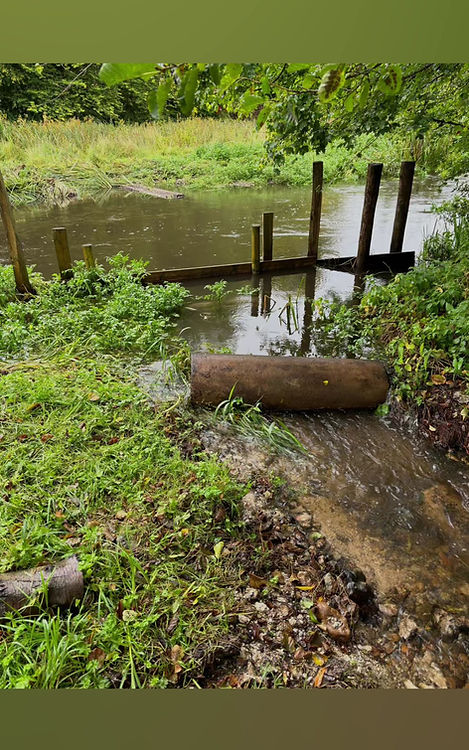
Chalk river and SSSI restoration works. Restoration works to a tributary of a chalk river, which had become overgrown and full of weed and silt, affecting the river levels and flooding to the adjacent SSSI. Works to restore the site in 2023 had previously been abandoned due to poor weather conditions. The brief was to obtain funding to complete the works and obtain new permits from the Environment Agency (EA) and Natural England (NA). The main risk was the small window of opportunity to complete the works between Sept and Oct (outside of nesting season, but before salmonoid season). Due to the expertise required to undertake the works and a limited window to obtain the grant, it was agreed with the grant provider that only one quote was required in order to use a local contractor with chalk river work and SSSI experience, and due to the limited timescales, we ran the approval request from the EA and NE concurrently with the grant application. The grant and the permits were approved, subject to an ecologist undertaking a water vole check, so in order to keep costs down and ensure continuity for the site we obtained an approved expert from a local organisation to carry-out the check and oversee the works on site free of charge. The works went ahead as planned, unfortunately due to the short working window and poor weather during 2024, the final leg of the works needed to be abandoned to protect the rest of the site. However, as the grant monies were only available until Feb 2025 and the need to wait another year to complete would be to the detriment of the previous works carried out, we approached NE to see if it was possible to continue the work during the salmonid season and approval from both EA and NE was given to complete the works by Feb 2025. To mitigate the risk of another postponement due to weather, we checked that the contractor would be available when needed, we approached NE for permission to work within the salmonoid season and requested a longer permit time between Nov 2024 and Feb 2025. This allowed the contractor to find the perfect weather conditions (frost) to fully complete the work, whilst complying with by the permit rules and satisfying the required improvements as set out in the SSSI Management Plan. The works are now completed and grant monies claimed on time and under budget.
 |
|---|
 |
 |
 |
 |
 |
 |
 |
 |
 |
 |
 |
 |
 |
05
Woodland Management Plan These private woodlands were Phase 1 of a 10-year Woodland Management Plan (WEP). The works were delivered by a woodland management company who held the relevant felling licence and included identifying, thinning and harvesting the timber and preparing a replanting schedule the Rural Payment Agency (Countryside Stewardship scheme) Our brief was to oversee the works on behalf of the client and obtain the receipts from timber works. We identified a number of potential risks to the project’s completion such as; a Public Right of Way through part of the woodlands, vehicular access to the site was via a locked and non-adopted highway managed by the local Parish Council (PC), on site - the removal of the old narrow entrance gate to the site and reinforcement of the entrance mouth to allow for heavy vehicles to remove the timber, the ongoing H&S of pedestrians using the road due the many vehicle movements, and prevention of pedestrians from accessing the site whilst the timber was being harvested, ongoing communication and engagement with users, stakeholders. We worked with the woodland management company to liaise with the PC and prepare notices they could share on their website and contact information for the Clerk to share, notices of the works and timings were put up locally, along with OOH contact information and a banksman was provided for H&S. Due to the potential of complaints, photographic images were taken of before, during and after of the road, entrance and exits of the site and after the works were completed, new gates were installed wide enough for future harvesting.

 |
|---|
 |
 |
 |
 |
 |
 |
 |
 |
 |
 |
|